I want to be upfront about something before I tell this story. I'm a medically retired veteran dealing with PTSD, major depressive disorder, and cognitive decline from service. Lawn care became my therapy. Something physical, outdoors, with visible results. But the cognitive decline meant I couldn't keep track of what I'd applied, when, at what rate, or what worked. I had notes in five different apps, product guides everywhere, and AI chat histories going back months.
That's why I built LawnSuite. Not as a business. As a tool to help me manage my own lawn without losing track of everything. My wife Kirralea saw what it could become and turned it into something everyone can use. But that comes later. First, the lawn.
The property
Coalfalls, QLD. A 1,214m² block with a 1900s Queenslander, heavy Coalfalls clay soil, and a 7.7-metre elevation drop from front to back. The front yard gets decent sun. The backyard is heavily shaded by mature trees.
When we moved in, the whole property was standard Couch grass. No site works had ever been done. Just whatever the previous hundred years of owners had left behind.
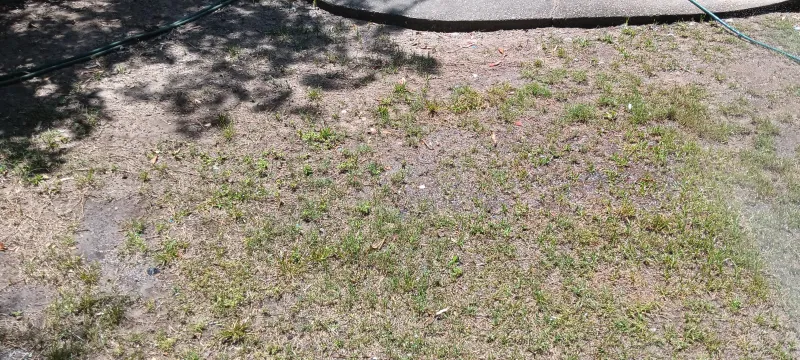
That's what the backyard looked like by October 2024. Mostly bare Coalfalls clay with a few surviving tufts of Couch. The shade was killing it, the soil was compacted concrete, and I was about to find out what was eating it from below.
The grub attack
I noticed patches of lawn pulling up like carpet. No root system holding it down. Grabbed a handful and rolled it back.
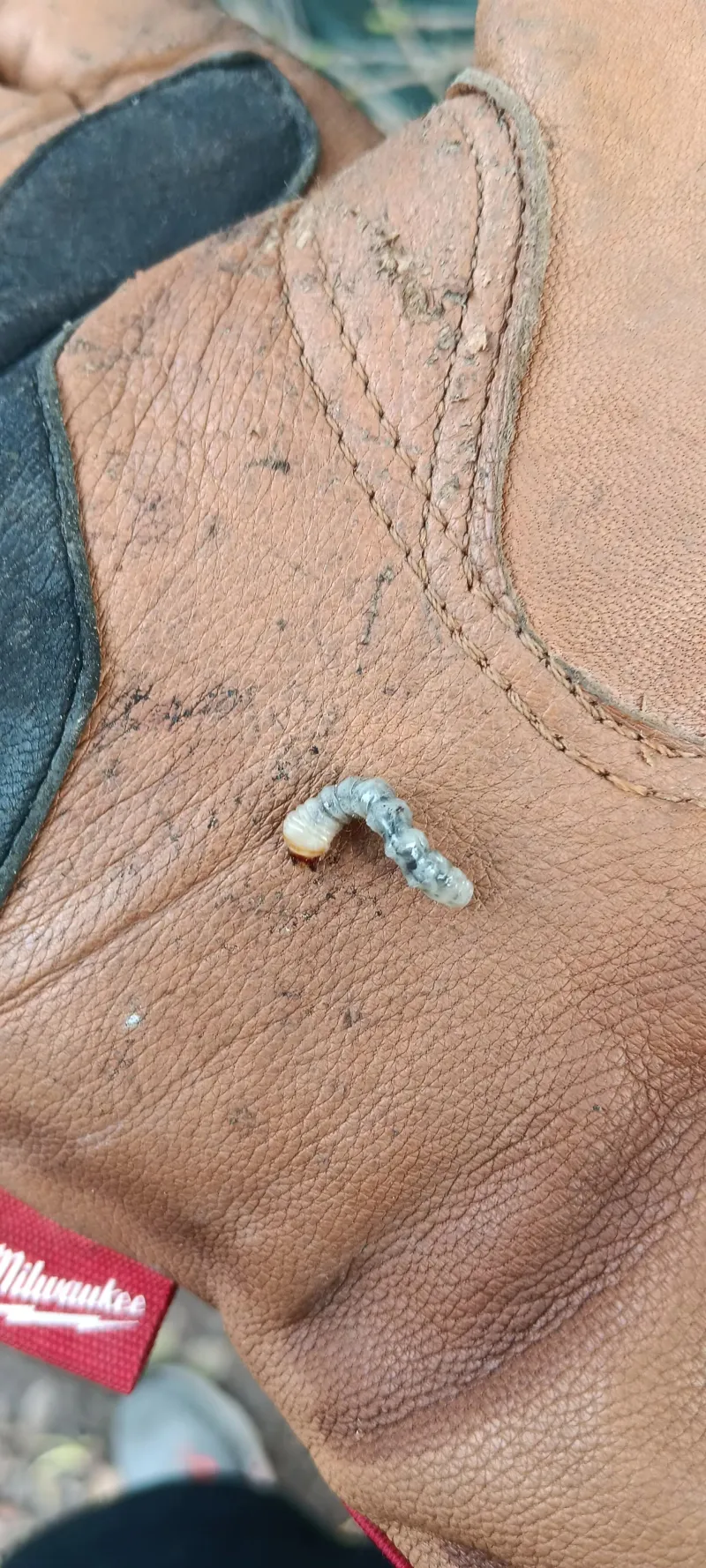
Curl grubs. Fat white C-shaped larvae chewing through the roots from underneath. I also found armyworm. The overnight damage kind where you wake up and a patch has been mowed to nothing.
I hit it with Syngenta Acelepryn (the 750mL liquid, preventive rate 7.5mL per 100m², curative at 15mL). One application gives six months of protection. That part worked. The grubs died.
But the damage was done. The root system was compromised, and the Couch was trying to recover through what was left.
The $500 mistake
This is where I stuffed up badly.
I knew winter weeds would move into the bare patches, so I applied Syngenta Barricade, a pre-emergent herbicide that stops new seeds from germinating. Gold standard product. Nothing wrong with Barricade itself.
The problem: Barricade stops all new growth from establishing. Including the Couch grass runners that were trying to repair the grub damage. The lawn's root system was already compromised, and I'd just told it it couldn't grow new roots either.
I didn't understand the product label well enough. I was fighting two separate issues. Grubs (Acelepryn) and weeds (Barricade). And each treatment alone was fine. But applying Barricade to a lawn that wasn't fully established with good root growth effectively killed it.
On a 1,200m² property, I was spending a fortune on herbicides, fungicides, soil amendments, and fertilisers. Throwing products at problems I didn't fully understand. No tracking, no data, no system. Just guessing.
The shade problem
The backyard made everything worse. Couch grass needs full sun, minimum 6 hours of direct light. Our backyard gets maybe 3-4 hours under the tree canopy. The Couch was always fighting a losing battle there.
On top of that, we had carpet grass mixed in with the Couch. Killing the carpet with selective herbicide was shocking the Couch. Causing brown-off every time I sprayed. One step forward, two steps back.
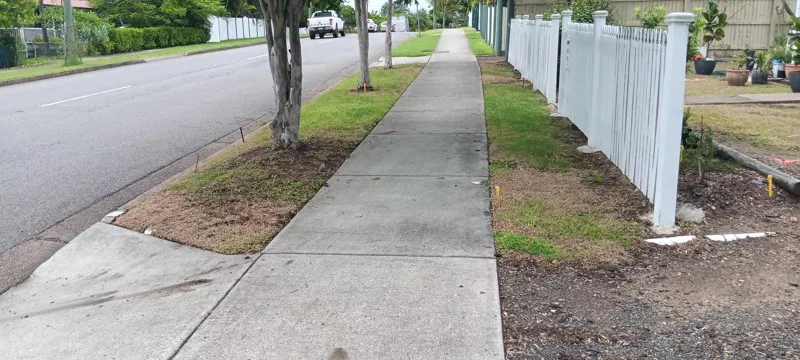
By December 2024, the footpath strip looked like this. Patchy, weedy, more dirt than grass. The Couch had given up. So had I.
The decision
I decided to kill everything and start fresh. No more patching. No more trying to nurse a grass variety that didn't suit the conditions. Start from scratch with the right turf for the job.
Sir Walter Buffalo DNA Certified. It handles partial shade (4+ hours of sun), has a deep root system for clay soil, and it's the most popular turf in Australia for good reason.
But first, everything had to go.
The renovation
Step 1: Kill off and burn (February 4, 2025)
I killed off the entire front yard and footpath strip. Then I hit it with a flame weed torch to burn off whatever was left. Nothing surviving.
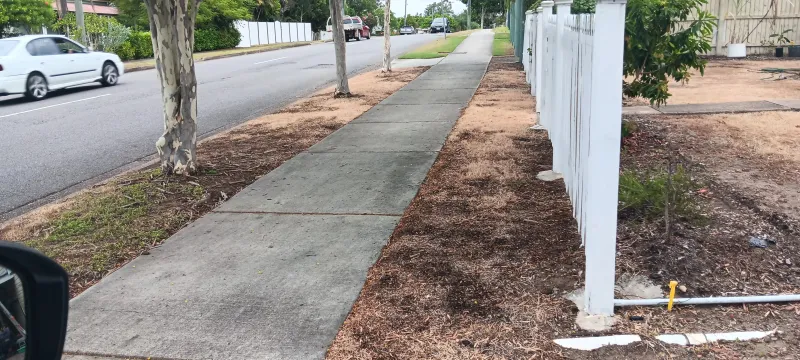
That's the footpath strip after the burn off. Clean slate.
Step 2: Soil testing (January 28, 2025)
Before I touched the soil, I tested it. Manutec pH test kit. The chemical colour-match kind.
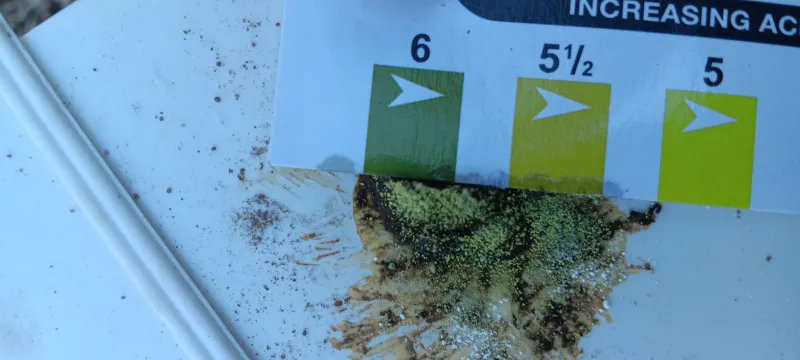
Results came back pH 5.5–6.5 depending on where I sampled. Acidic. Which is typical for Coalfalls clay. Buffalo prefers 6.0–7.0, so I needed to bring it up.
Step 3: Scarify, cultivate, amend
Here's where I did things in order, but not necessarily with the right tools.
- Ryobi OSF1835BL scarifier with the RSCA1 dethatcher attachment, to break up the dead material and surface thatch.
- EGO cultivator to turn over the compacted clay. This is where I should have hired a Red Roo rotary hoe. The EGO cultivator on Coalfalls clay was like trying to dig a trench with a fork. I destroyed the battery life on my Milwaukee M18 cells pushing through that soil. But I was on a budget and wanted to do it gradually in my own time.
- Gypsum at 200-500g per m². Breaks clay aggregation without changing pH. Essential for Coalfalls clay.
- Dolomite to raise pH and add magnesium. Combined with the gypsum to address both structure and chemistry.
- Volcamine Zeolite (2-4mm grade, 60kg) at 1-2kg per m². Permanent soil improvement. Holds nutrients in the root zone instead of letting them wash through clay.
- LawnPride Under Turf Starter with high phosphorus (2-3kg per 100m²) to kick-start root development.
Step 4: Lay the turf (late February 2025)
Picked up Sir Walter Buffalo DNA Certified direct from Bunnings. Loaded it into the back of the SUV and the ute. My mate helped carry it.
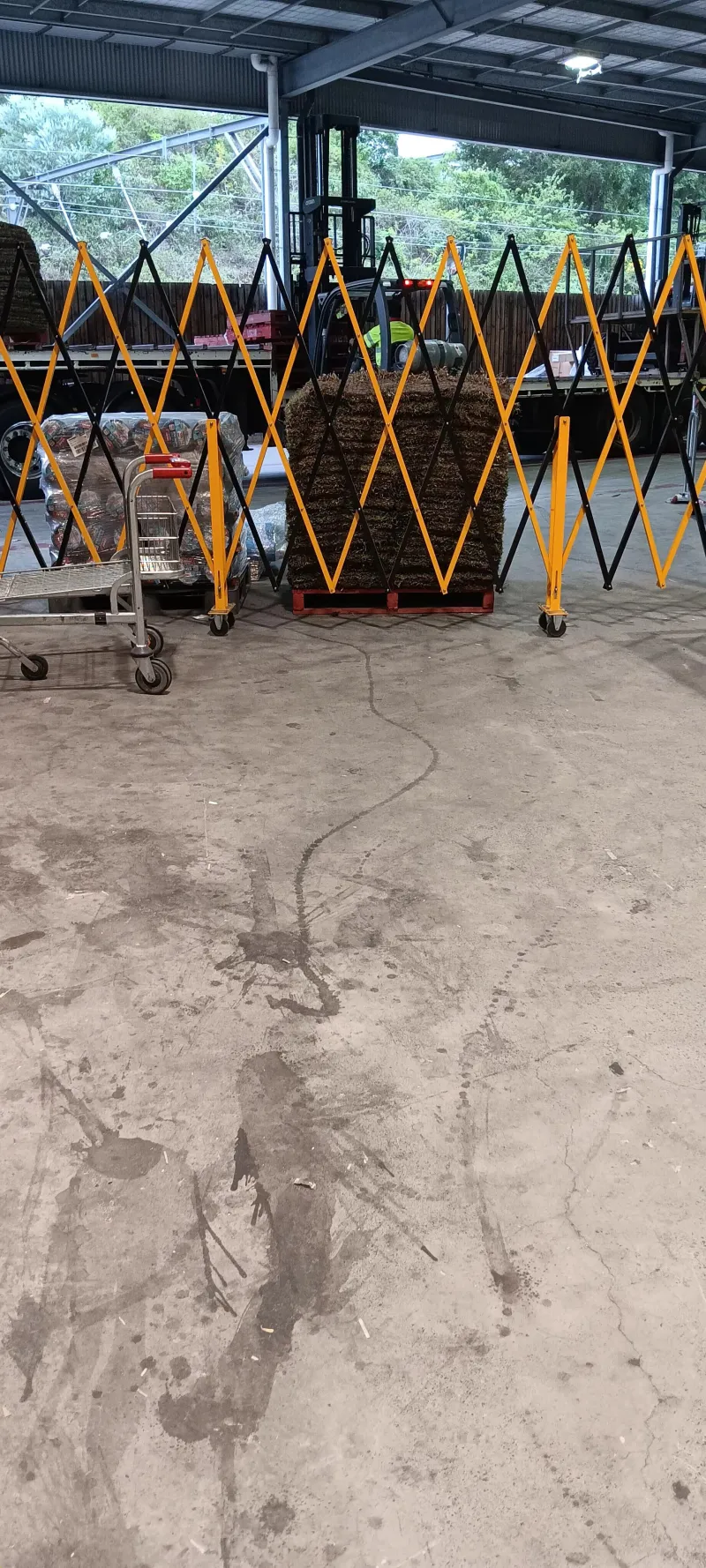
We laid the front yard and footpath strip. Cut pieces around the Leopard Trees on the verge, butted the rolls tight, and watered it in immediately.
We finished laying the turf knowing Cyclone Alfred was days away.
Cyclone Alfred
Late February 2025, Cyclone Alfred hit South-East Queensland. The timing was both a blessing and a nightmare.
Blessing: Free irrigation. The cyclone dumped serious rain on the new turf. We didn't have to worry about watering for weeks.
Nightmare: The new Sir Walter wasn't established. The roots hadn't taken hold yet. The constant moisture, humidity, and warm temperatures created perfect conditions for fungal disease. And I couldn't treat it. You can't apply fungicide to turf that hasn't established.
I just had to watch and hope.
The recovery
Three weeks later, the Sir Walter was starting to knit together.
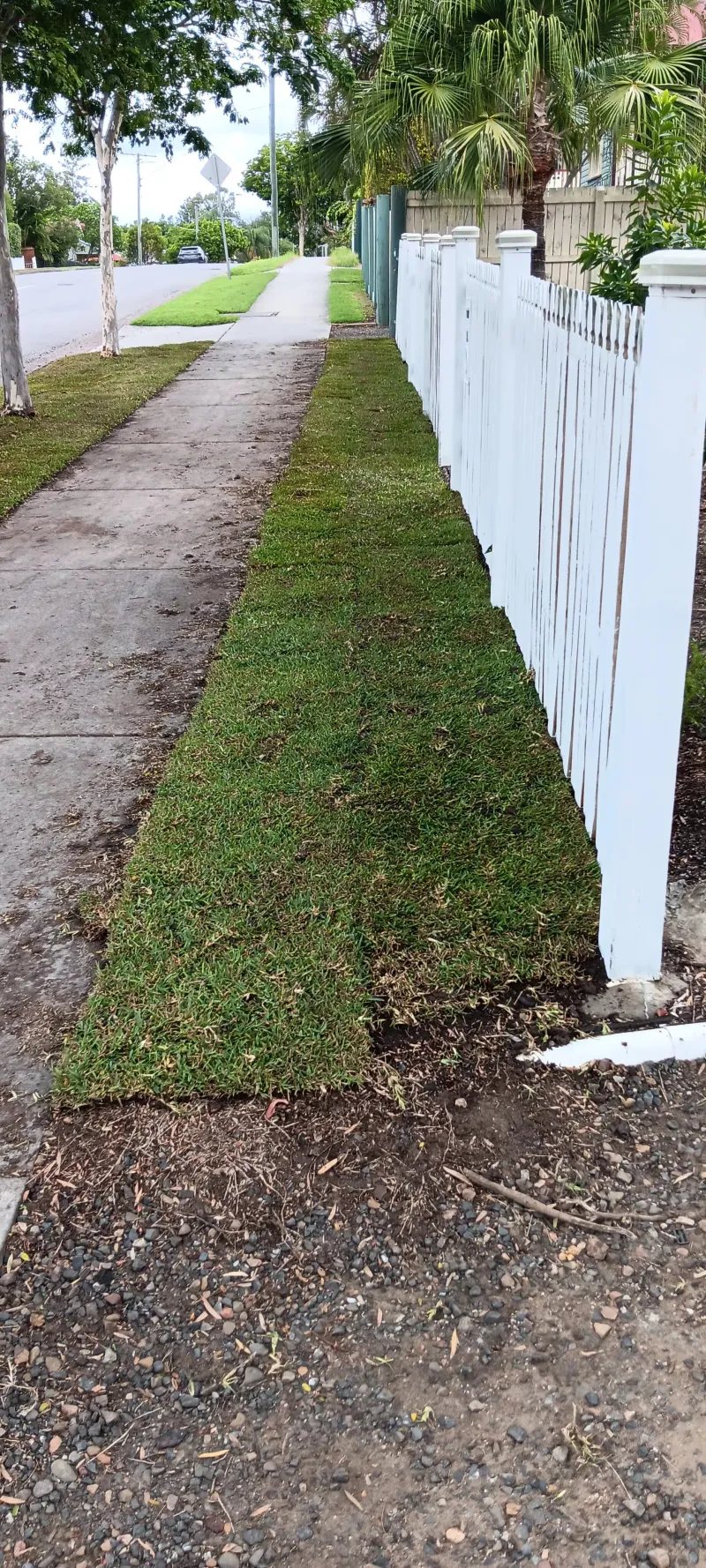
The verge strip along the footpath was filling in. The Buffalo runners were spreading across the joins. It wasn't perfect. Some pieces had brown edges, some stress from the cyclone moisture. But it was alive and growing.
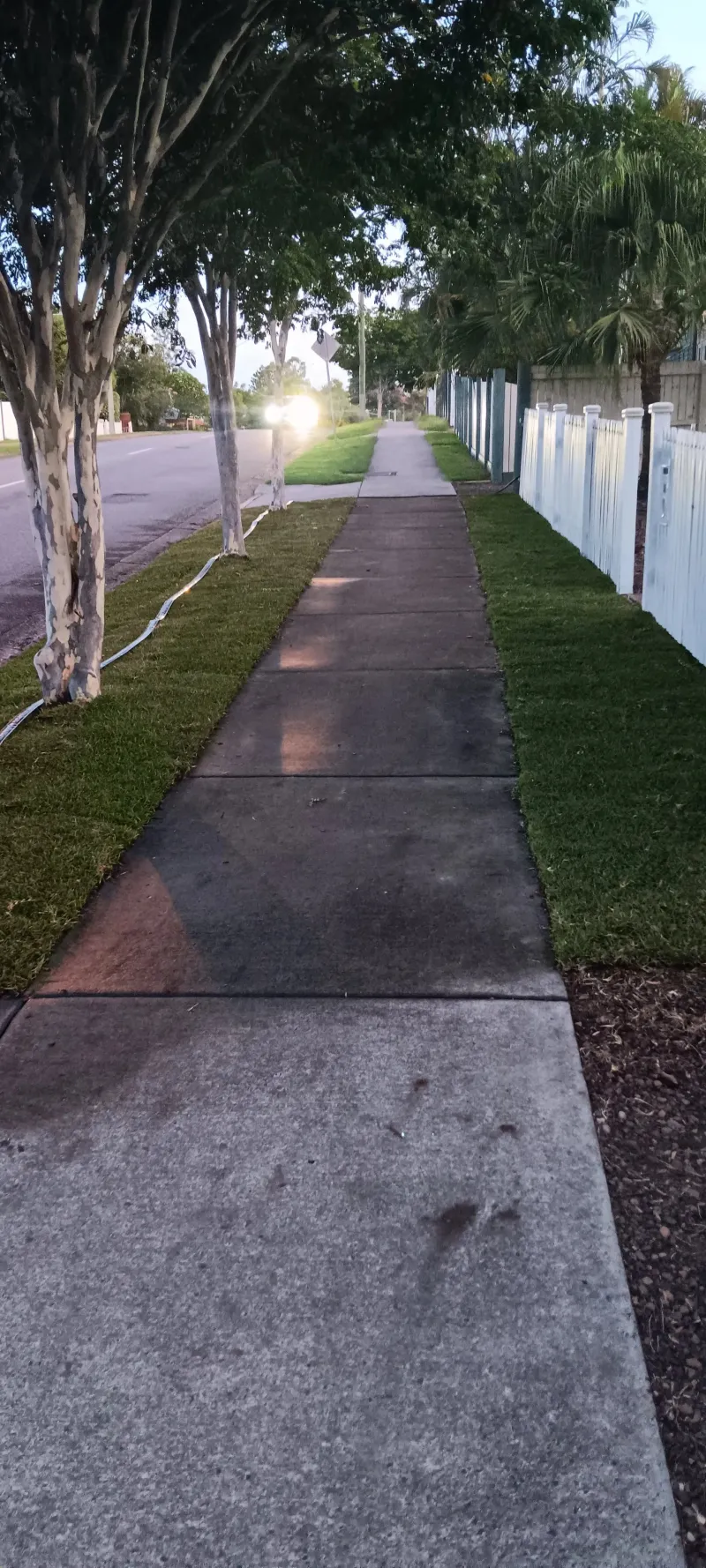
By late March, golden hour told the story. Both verge strips glowing green. The transformation from bare clay to established turf in under six weeks.
Monitoring and testing
I didn't stop at laying turf. I measured everything.
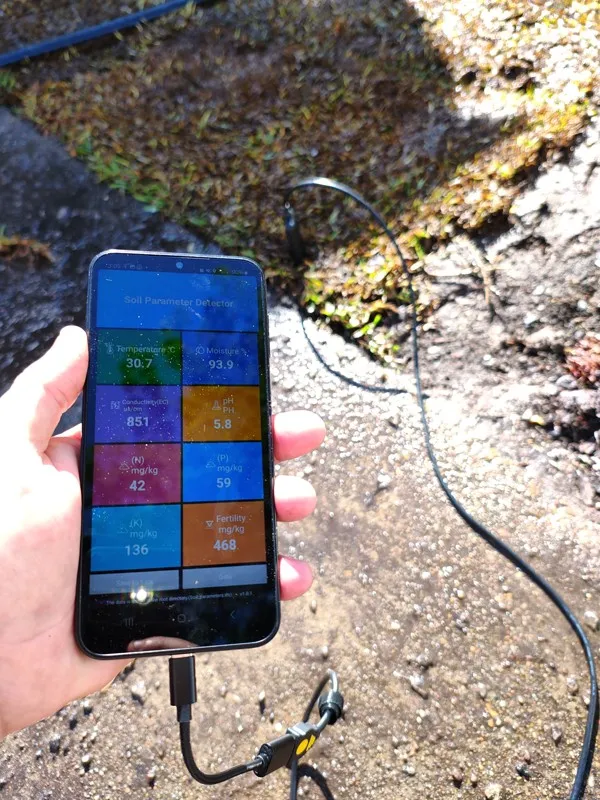
Digital soil sensors tracking temperature, moisture, pH, and NPK levels right at the root zone. This photo is from April 5, 2025. You can see the turf still showing stress at the edges where the clay meets the concrete.
I tracked every watering session. A Hoselink flow meter on the tap told me exactly how many litres went in. 1,364 litres and counting in the first two weeks.
What I'd do differently
- Hire a rotary hoe for the clay. The cultivator worked, but it tortured the batteries and my back. A Red Roo for a weekend would have been $200 well spent.
- Don't apply Barricade to a recovering lawn. If the root system is compromised, pre-emergent herbicide will stop it from repairing itself. Wait until the lawn is fully established before protecting it.
- Get a soil test earlier. I wasted months applying products to soil I didn't understand. The pH test took 10 minutes and changed my entire approach.
- Track everything from day one. The amount of money I wasted guessing, buying products that didn't suit my soil, applying at the wrong rates, repeating treatments because I forgot what I'd already done. It adds up fast on 1,200m².
Why I built LawnSuite
Somewhere in the middle of all this. The grub attack, the Barricade mistake, the renovation, the cyclone, the endless product research, I realised I needed a system. Not more spreadsheets. Not more AI chat histories. Not more scribbled notes on the back of fertiliser bags.
I needed one app that knew my turf type, my soil, my zone areas, my treatment history, and the weather. One place where I could calculate dosage rates without Googling the formula every time. One timeline where I could see what I'd applied last month and whether it worked.
I'm dealing with cognitive decline from military service. Keeping track of this stuff across five different apps and a dozen browser tabs wasn't working. I needed it in one place or I was going to keep making expensive mistakes.
So I built it. For myself. One screen at first. Just a zone tracker and a dosage calculator. Then treatment logging. Then weather integration. Then AI that could answer questions about my specific lawn, not generic advice.
My wife Kirralea saw what it was becoming. She's the director of McPherson Solutions. The business brain behind the operation. She took my personal project and turned it into something every Australian lawn owner can use. My mate John from Beg Your Garden pushed me in the same direction.
Now it's LawnSuite. And every feature in it traces back to a real problem I hit on my own 1,200m² of land on Coalfalls clay.
The backyard
Still dirt and weeds. I'm waiting for the release of Stampede Buffalo. A new variety. To see how it performs before committing to returfing 632m² of shaded backyard. The front yard R&D taught me to be patient and do it right instead of throwing money at the first thing that looks green.
If you want to track your own lawn renovation. Treatments, rates, timing, weather, photos. Without the guesswork, try LawnSuite. It's free during beta. See the full feature list.
Related guides
- The complete Sir Walter Buffalo care guide. Everything I know about maintaining it
- Why I stopped mowing my Buffalo at 25mm. Mowing height mistakes
- Best lawn care apps for Australian homeowners. What's worth using
- The complete Kikuyu grass care guide. If you're on Kikuyu instead
Weather, soil data, treatment history, and dosage rates in one app. Built for Australian lawns.
Join the Android Beta — Free