On Wednesday 30 September 2026 I renovated my Sir Walter Buffalo lawn. I scalped it, cored it, spread three soil amendments and topdressed the whole 117 m². This post covers what I did and why I'm testing it. It doesn't say whether any of it worked, because I don't know yet.
I replaced my old Couch with Sir Walter in 2025 (that story is here). The soil underneath is heavy clay in Ipswich. I want LawnSuite to stand on evidence rather than on what someone is selling, so I'm logging my own lawn habits and checking them against the research, the same way I'd check anyone else's advice.
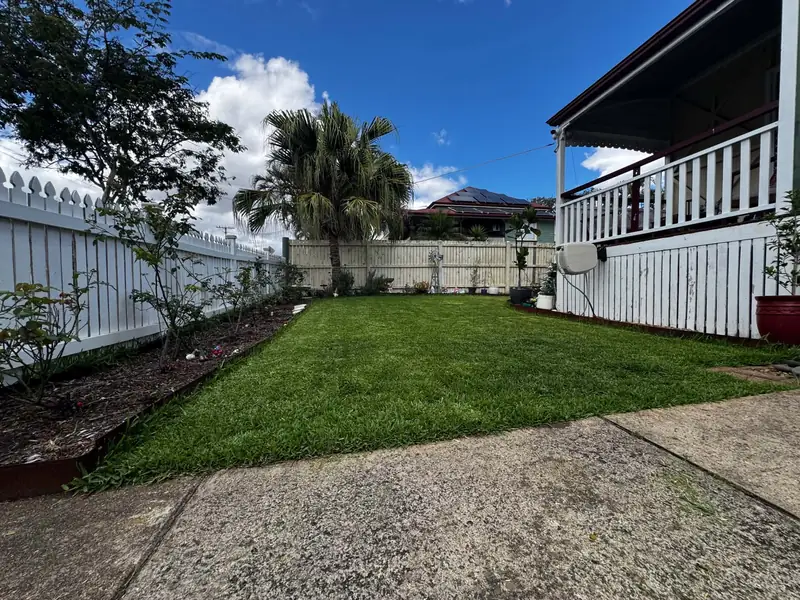
The side lawn on renovation day.
What I did on day 0
These are the steps in the order I logged them.
| Step | What I did |
|---|---|
| Scalp | Mowed down to 25 mm |
| Core aeration | Hired a Billy Goat PL1801 aerator and made 3 passes. The tines only got about 15–25 mm into the clay |
| Cores | Mowed over them. Hard, compacted clay cores that didn't break up were removed |
| Zeolite | VolcaMin zeolite, about 600–800 mL by volume per 25 m² |
| Biochar | Horticultural charcoal, broken up inside thick lawn bags with a sledgehammer. About 600–800 mL per 25 m². My first time using it |
| Pumice | Broken up the same way. About 600–800 mL per 25 m². Also a first for me |
| Topdressing | About 1 tonne of Centenary Landscaping "Fairway Pro Maxx" over the 117 m² |
A few notes on those numbers. I wrote some of the day-0 details up two days later from memory, so the amounts are approximate. The amendment amounts are by volume, not weighed. The topdressing is deeper in some sections because we were levelling the lawn at the same time. They're what I did on my own lawn, not a recommendation for yours.
I also went lower than I said I would. In my mowing height post I wrote that I'd only take a renovation scalp to 30–35 mm. On the day I took it to 25 mm. That's on the list of things to watch, and I'll report how the recovery went either way.
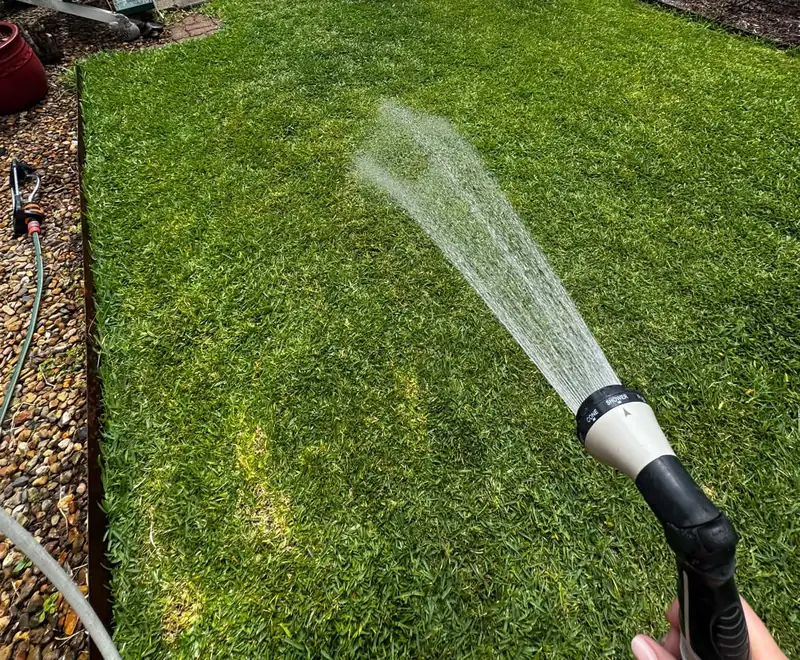
Watering ahead of the aerator to add moisture before coring.
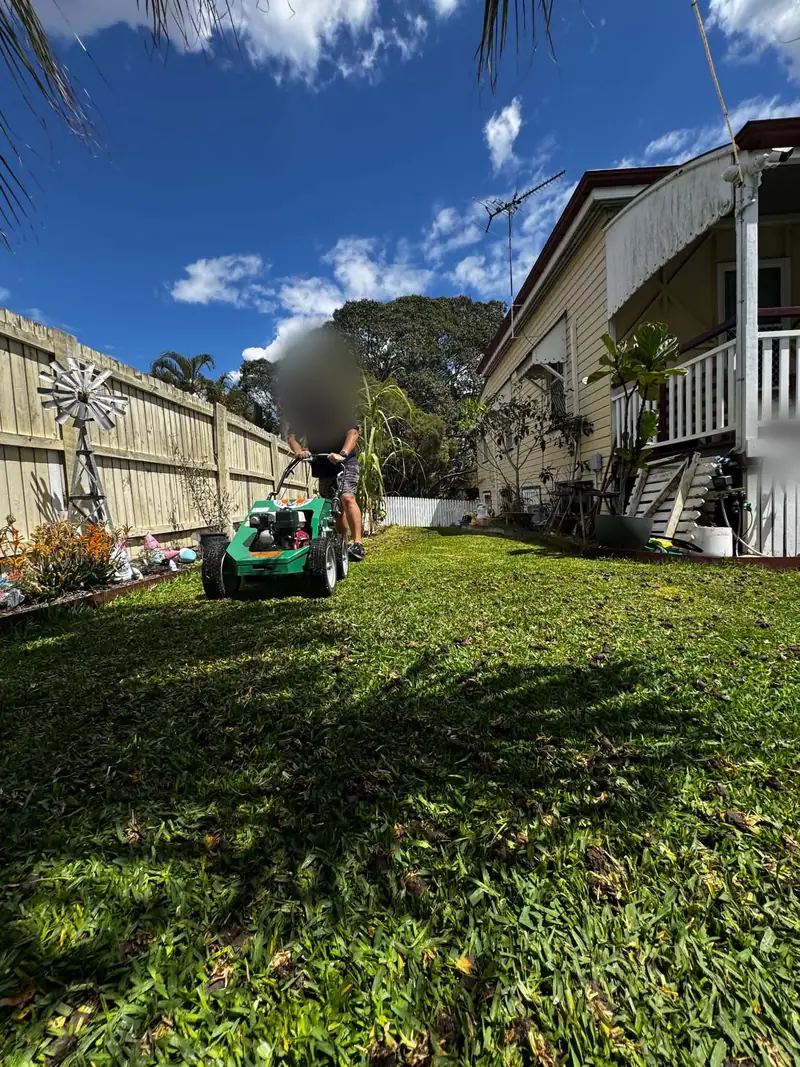
Core aerating. Three passes still only got the tines about 15–25 mm into the clay.
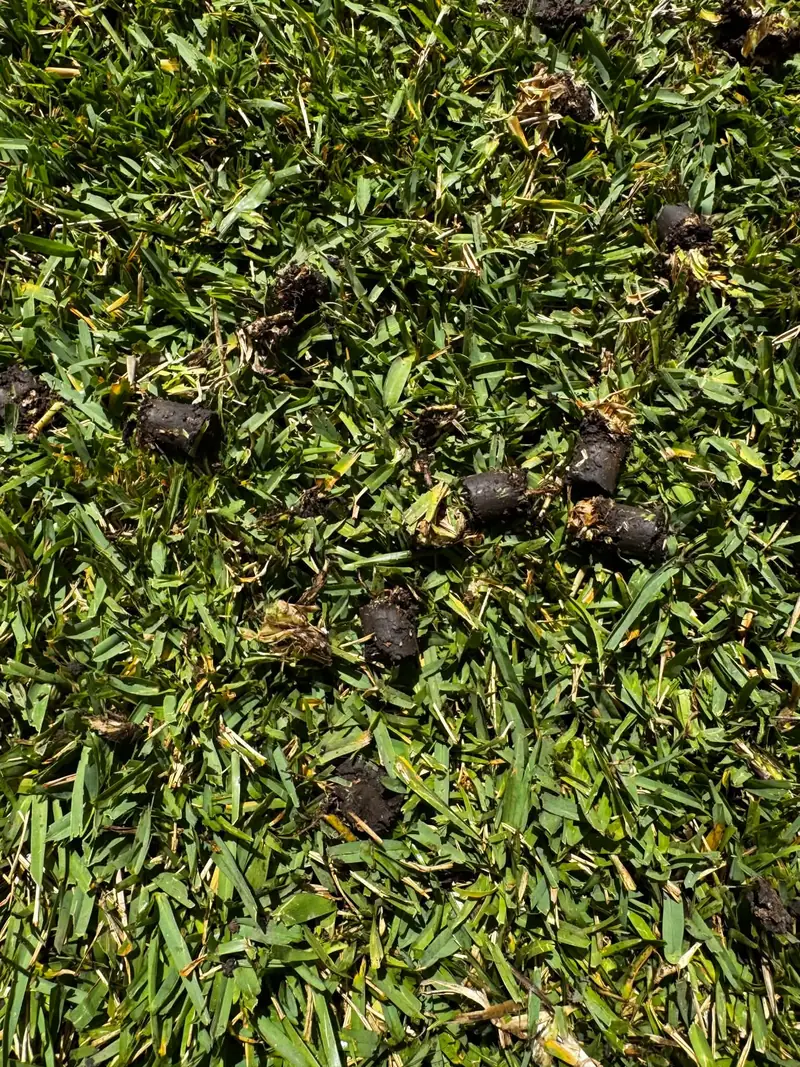
Clay cores sitting on the lawn after aerating.
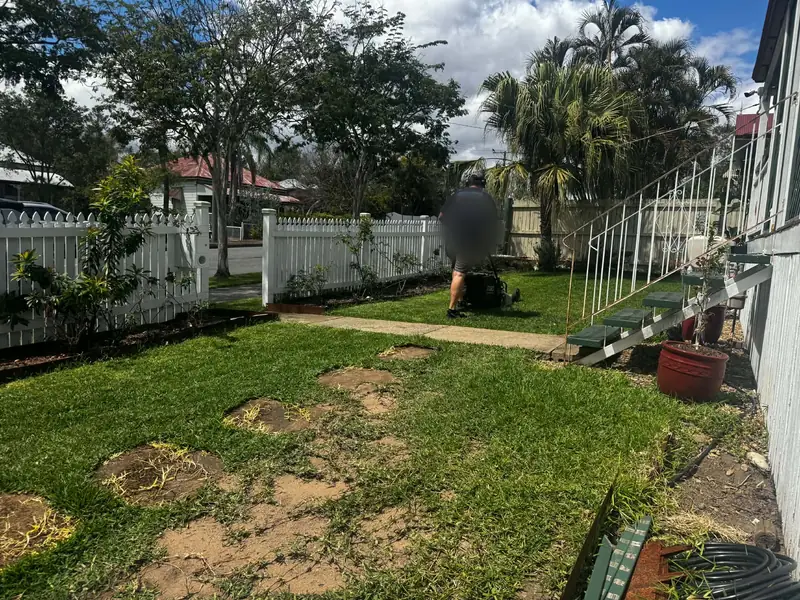
Mowing over the cores. The ones that wouldn't break up came off the lawn.
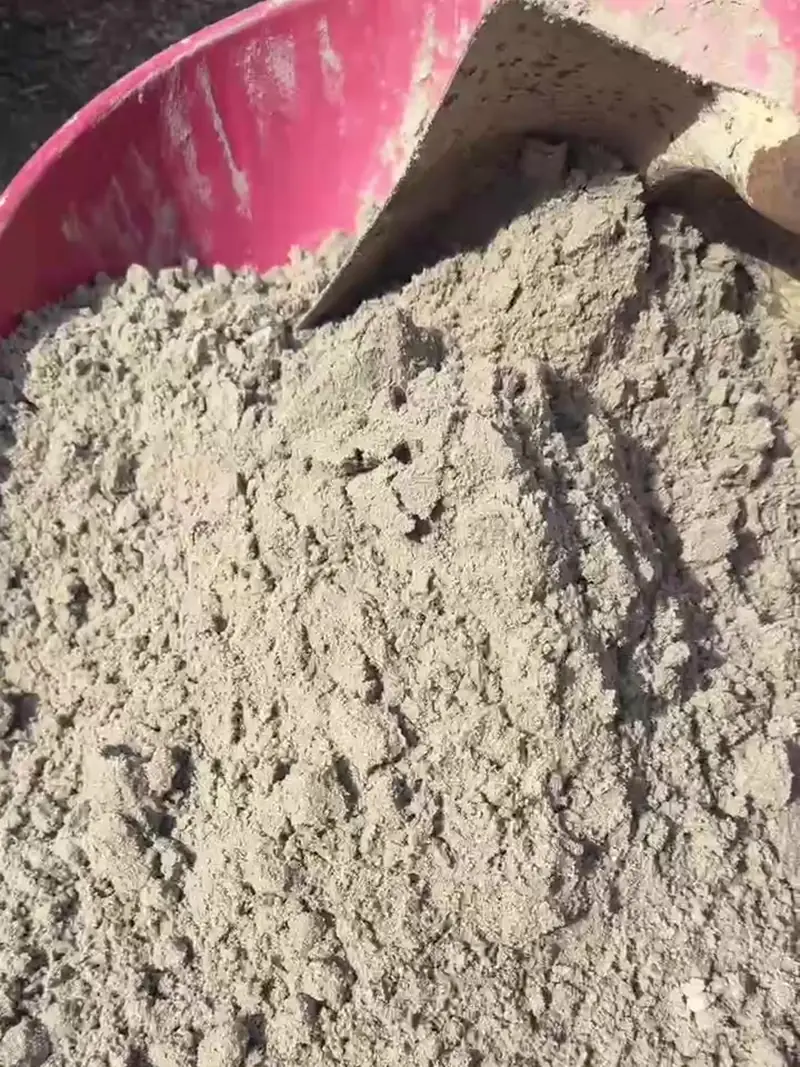
Topsoil ready to spread. The VolcaMin zeolite, biochar and pumice were mixed in a bucket and spread over each zone first.
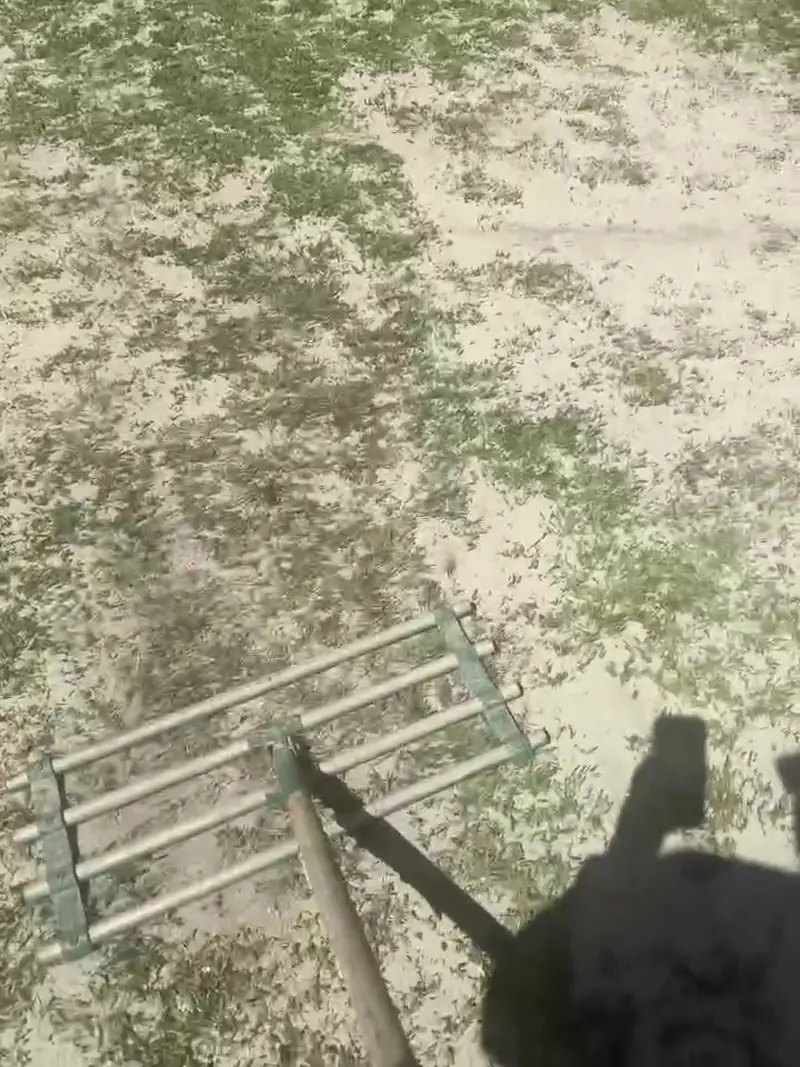
Spreading the topdressing with a topsoil spreader.
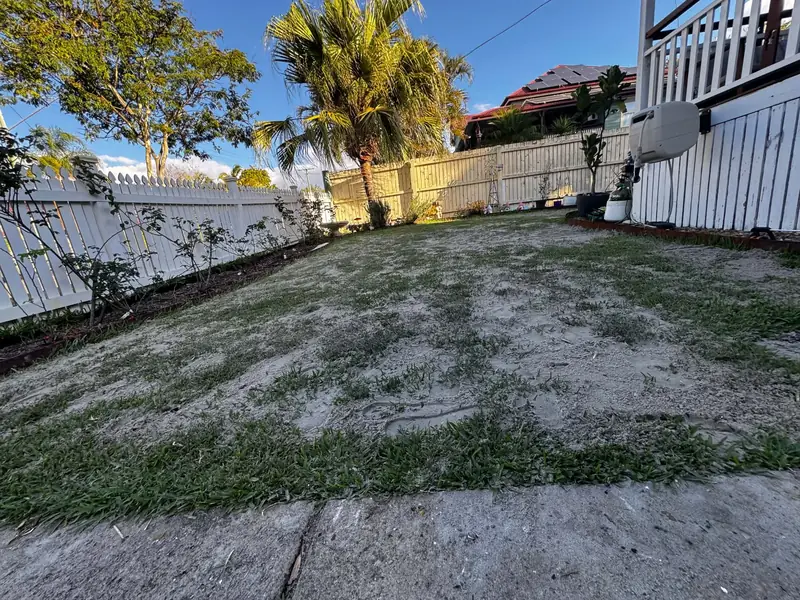
The same side lawn after topdressing.
Why I'm testing each step
Each of these steps comes with claims attached, from suppliers, forums and research papers. Some of that research is on turf. A lot of it is on other crops, or on sandy soil rather than clay. Below is the question I have for each one. Part 2 will go through the evidence properly.
Coring heavy clay
Three passes still only got the tines 15–25 mm into my soil. My question is simple: does coring that shallow do much on clay this heavy, and would more passes or different tines get deeper?
Zeolite
Zeolites are minerals with a high cation exchange capacity, which means they can hold positively charged nutrients such as ammonium and potassium. Turf research, mostly on sand-based root zones, suggests zeolite may help the root zone hold on to ammonium nitrogen and potassium. Clay generally holds nutrients much better than sand already, so I honestly don't know whether adding zeolite to clay makes a noticeable difference. I also worked zeolite into this soil before the turf went down in 2025, and in that post I wrote that it holds nutrients that would otherwise wash through clay. I'm less sure of that now, which is part of why I'm testing it. Whether it changes how much water the soil holds is another open question.
Biochar
Biochar is charcoal made for use in soil. Studies in turf and other crops report mixed results on water holding, rooting and disease, and the effect seems to depend on the type of biochar and the soil it goes into. I used horticultural charcoal, which may not behave like the biochars in those studies.
Pumice
Pumice is a light, porous volcanic rock that's often used in potting mixes to add air space. It's also high in silica. Whether any of that silica becomes available to grass roots, and how quickly, is something I haven't found a clear answer to yet.
Silicon
Grasses take up silicon from the soil. Research in related grass crops such as rice and sugarcane suggests silicon may help with disease, heat and moisture stress, and pest pressure. A few studies on St Augustine grass (buffalo grass, such as Sir Walter, in Australia), which is the same species as buffalo (Stenotaphrum secundatum), suggest silicon may help reduce grey leaf spot. Those studies mostly added silicon to the soil in other forms, so whether pumice or a foliar spray does the same is part of what I'm testing. That's why I added pumice and why I'm planning a mono-silicic acid foliar spray. Buffalo isn't rice or sugarcane, though, so I'm treating the crop research as a reason to test, not as proof.
Still to come
- Mono-silicic acid foliar spray. I'll apply it following the product label, and I'll log the product, the date, the time of day and the weather when I spray.
- Mulching. I'll fit the mulching plug to the mower after the first 2–3 mows and log the date I switched over.
How I'm measuring it
I set up a log with a few simple measurements, taken the same way each time:
- Photos on days 7, 14, 30, 60 and 90 from 3 fixed points, at the same time of day, with a ruler in shot.
- Ground cover, as an estimated percentage at each point.
- Colour, scored from 1 (brown) to 9 (dark green).
- How many days it takes for full cover to come back after the scalp.
- Rooting depth on day 30 and day 90: the deepest white root in a small plug or spade slice.
- Infiltration: a ring pushed into the soil and timed while 25 mm of water soaks in, plus a screwdriver push test for compaction.
- Mowing dates and heights, any pests or disease, and watering, alongside rain, temperature and soil moisture from my home weather station.
What this can and can't tell me
This is one lawn. I did everything at once and the whole lawn got the same treatment, so even if it looks great at day 90 I won't be able to say which step made the difference, or whether plain coring and topdressing would have done just as well. It's a dated record of what I did and what I saw, not an experiment.
Part 2, somewhere around day 60 to 90, will cover what happened, including anything that didn't work or made no visible difference, alongside what the research says about each step.
No affiliation: I'm not connected to Billy Goat, VolcaMin or Centenary Landscaping. This post isn't sponsored, and there are no affiliate links.
Related guides
- How I killed my Couch lawn and started over with Sir Walter Buffalo. The first renovation on this lawn
- Why I stopped mowing my Buffalo at 25mm. Mowing heights for Sir Walter on clay
- Spring lawn renovation in Australia. Scarifying, coring and topdressing in spring
- The complete Sir Walter Buffalo care guide. Fertilising, watering, weeds and disease
Keep your lawn area, weather and watering records together in LawnSuite.
Start Free in Your Browser