
Garden care & safety
The connected loop isn't just for turf. The veggie patch, the rose bed, the fruit trees out the back and the native border all run on the same zones, the same shed and the same Jed, LawnSuite's AI lawn assistant. And for the parts you'll actually eat from, it adds the bit that matters most: edible-zone screening. It does not tell you withholding periods; for those, read the label.
Lawns, gardens, fruit trees and natives use the same system
One zone, one shed, one Jed, whatever's growing in it. You don't learn a second app for the garden; you just mark out a different kind of patch.
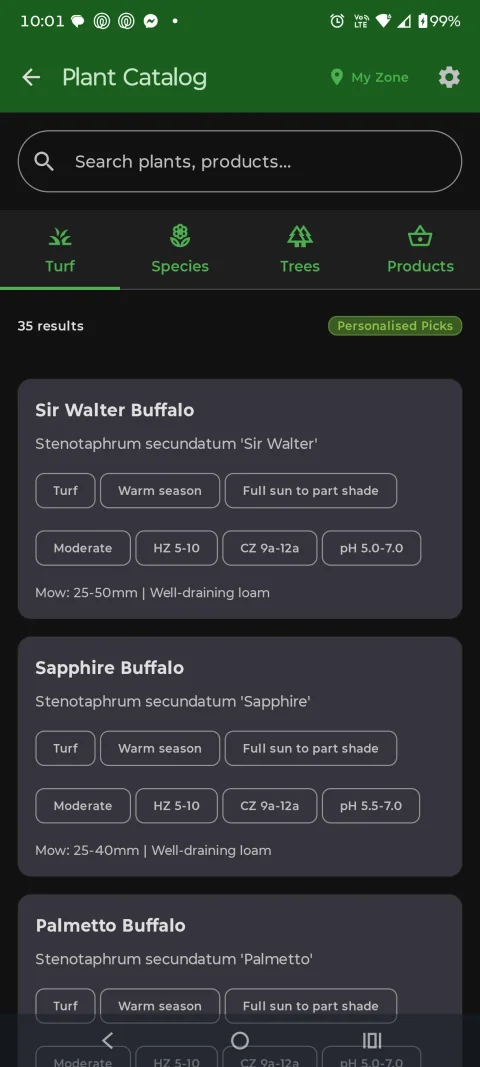
One catalogueTurf, roses, fruit trees & natives
One catalogue for the whole garden
35 Australian turf cultivars, David Austin roses, and 18 trees (9 that fruit, like citrus, mango, avocado, macadamia, olive and fig, and 9 ornamentals and natives like jacaranda, banksia, grevillea and lilly pilly) plus a 50-plant edible & ornamental garden catalogue. Each carries NPK targets, pruning and mowing guidance and ratings for shade, wear and drought, and it all works alongside My Shed, where LawnSuite remembers the products you own.
Zones aren't just for turf
Mark out a veggie patch, a rose bed, an orchard corner or a native border exactly the way you'd mark out a lawn zone. Area, soil type, sun exposure and climate (auto-detected from your postcode) all feed the advice the same way. You get one free zone to start, so you can try it on a single bed.
Jed knows plants, not just grass
Ask about black spot on the roses or fruit fly on the citrus and Jed answers from your plants, your soil estimate and the products already in your shed, not a generic forum thread. Same grounded advice you get for the lawn, pointed at the garden bed.
A plan for each bed, built from what you're growing
Pick a plant from the catalogue and Jed builds a care plan around it, not a one-size-fits-all calendar.
Care plans tailored to the plant
Feeding, pruning windows, pest watch and seasonal timing for that plant in your climate zone, whether it's a Meyer lemon, a David Austin rose or a Lilly Pilly hedge. The plan is built from the catalogue entry's care targets and the label rates you enter, then matched to your conditions.
Recommends what you already own
Just like the lawn, Jed builds the plan from the products in your shed instead of sending you back to Bunnings for something you don't need, and it explains the why, so you learn your garden as you go.
History is the garden's memory
Your treatment log keeps the dates, products and notes you record for each bed. Check those records and share relevant details when asking Jed; Web does not send treatment history to Jed.
Extra care where it matters: food and natives
For edible beds and sensitive natives, LawnSuite adds guardrails, screening to help you make safer calls.
Straight to the label, never around it
Mark a zone as edible and LawnSuite screens out products that aren't permitted there. LawnSuite does not provide withholding periods: for harvest waiting times, re-entry, and PPE, read the current product label. That is the only source for it.
Risky picks screened out & organic-first
For veggie patches, herb gardens and orchards, Jed steers you toward organic-first options and away from broad-spectrum herbicides near your food plants, prompting you to check the label. Edible plants in the catalogue carry their own safety notes, so the warnings show up where they matter.
Water-compatibility warnings
Add plants with clashing water needs to the one zone and LawnSuite warns you; overwatering natives is how you invite root rot. Hydrozoning (a separate zone per water need) keeps the natives and the veggies both happy.
Start free. 1 zone and 20 Jed chats in your first 14 days, then 7 a week (photos welcome in chat) are free, no card needed: enough to set up a garden bed and feel out a care plan. Pro lifts it to 10 zones (room to hydrozone the natives away from the veggies properly) and up to 1,500 Jed chats a month, plus soil-test uploads in the Android app, at $149.99/yr (or $14.99/mo); Founding Member pricing is $49.99/yr (renews at $49.99/yr). Your Founding price stays the same for as long as your subscription stays active. If you cancel after Founding closes to new sign-ups (at 100 paying subscribers, all plans), it can't be restored.
Still got a question or two?
The getting-started FAQ covers how Jed picks products, whether you have to measure, how exact the dosages are and what it all costs.